
Nicotine Pouch Strength Explained: mg per Pouch vs mg per Gram
Why an ICEBERG can says 120 while VELO says 10: the two ways nicotine is labelled, how to convert using can weight and pouch count, a quick-reference table and why the same mg can feel different.
Standing in front of a nicotine pouch shelf, you will see some confusing numbers. A HELWIT can says 3.5mg, a VELO can says 10mg, a CUBA Ninja can says 15.6mg, and then suddenly an ICEBERG can says 50mg and another says 120mg. At face value you might think the 120mg can is thirty times stronger than the 3.5mg one. Reality is not that simple, and misunderstanding this point is the most common reason people end up with a can far too strong for them.
This article explains clearly how to read nicotine pouch strength: what mg per pouch means, what mg per gram means, how to tell which one a can is using, how to convert between the two, and the factors beyond the number that make the same nicotine level feel different. At the end there is a conversion table for quick reference.
Two common ways to label strength
mg per pouch (mg/pouch)
This is the most intuitive method: the number tells you how much nicotine is in one pouch. A can labelled 10mg/pouch means each pouch contains 10mg of nicotine. Most Swedish brands and major international brands such as VELO, ZYN, HELWIT and LOOP use this method or print both figures.
mg per gram (mg/g)
This method tells you how much nicotine is in each gram of pouch material. A can labelled 50mg/g means there are 50mg of nicotine in every gram of material. Because a pouch usually weighs less than one gram, the actual nicotine per pouch is lower than the figure printed on the can. Many Eastern European brands use this method, especially for very strong lines, and this is where figures such as 35mg, 50mg, 100mg, 120mg or 160mg on ICEBERG Strong, Hot ACE, Emerald or Hardcore come from.
The key point: an mg/g figure and an mg/pouch figure cannot be compared directly. To compare them, you have to convert to the same unit.
How can you tell which method a can uses?
Method 1: read the unit on the can
This is the most reliable way. Most cans print the unit next to the number, for example “10 mg/pouch” or “nicotine 20 mg/g”, or print both. Look on the top of the lid, the side of the can or the label underneath.
Method 2: look at the size of the number
This is a quick guess when you cannot see the can. Mg-per-pouch figures on the market usually range from about 2 to about 20mg. When you see figures such as 35, 43, 50, 100, 120 or 160, they are almost certainly mg/g. This is only a rule of thumb, not a substitute for reading the unit.
Method 3: calculate from weight and pouch count
On product pages at snussaigon.com, each can lists its net weight and number of pouches. Divide the weight by the number of pouches to get the weight of one pouch. From there you can convert in either direction.
The conversion formula
There are only two formulas, and they are really one:
mg per pouch = mg/g × weight of one pouch (grams)
mg/g = mg per pouch ÷ weight of one pouch (grams)
Weight of one pouch = net weight of the can ÷ number of pouches in the can.
Real examples with products in the shop
Let's apply the formula to a few products in stock, using the weight and pouch count shown on the product pages.
LOOP: a very “clean” example
LOOP Strong, Extra Strong and Hyper Strong cans weigh 12.5g for 20 pouches, about 0.625g per pouch. LOOP labels them 9.4mg, 12.5mg and 15.6mg per pouch. Converted to mg/g: 9.4 ÷ 0.625 ≈ 15mg/g, 12.5 ÷ 0.625 = 20mg/g, 15.6 ÷ 0.625 ≈ 25mg/g. Three neat steps of 15, 20 and 25mg/g show that LOOP designs its strengths in even steps. It is a nice example for understanding how the two units relate.
International VELO
Many international VELO lines in the shop have 20 pouches in a 13g can, so 0.65g per pouch. A can at 10mg per pouch is equivalent to about 15mg/g.
HELWIT
HELWIT cans weigh 9g for 20 pouches, about 0.45g per pouch. 3.5mg per pouch is equivalent to about 7.8mg/g. Small pouches and low concentration are why HELWIT is considered a light range.
CUBA Ninja
CUBA Ninja is labelled 15.6mg in a 13g can that holds as many as 25 pouches, about 0.52g per pouch. If 15.6 is mg per pouch, that is equivalent to about 30mg/g. A smaller but more concentrated pouch can feel very different from a LOOP pouch with the same 15.6mg.
ICEBERG 12mg and the Strong lines
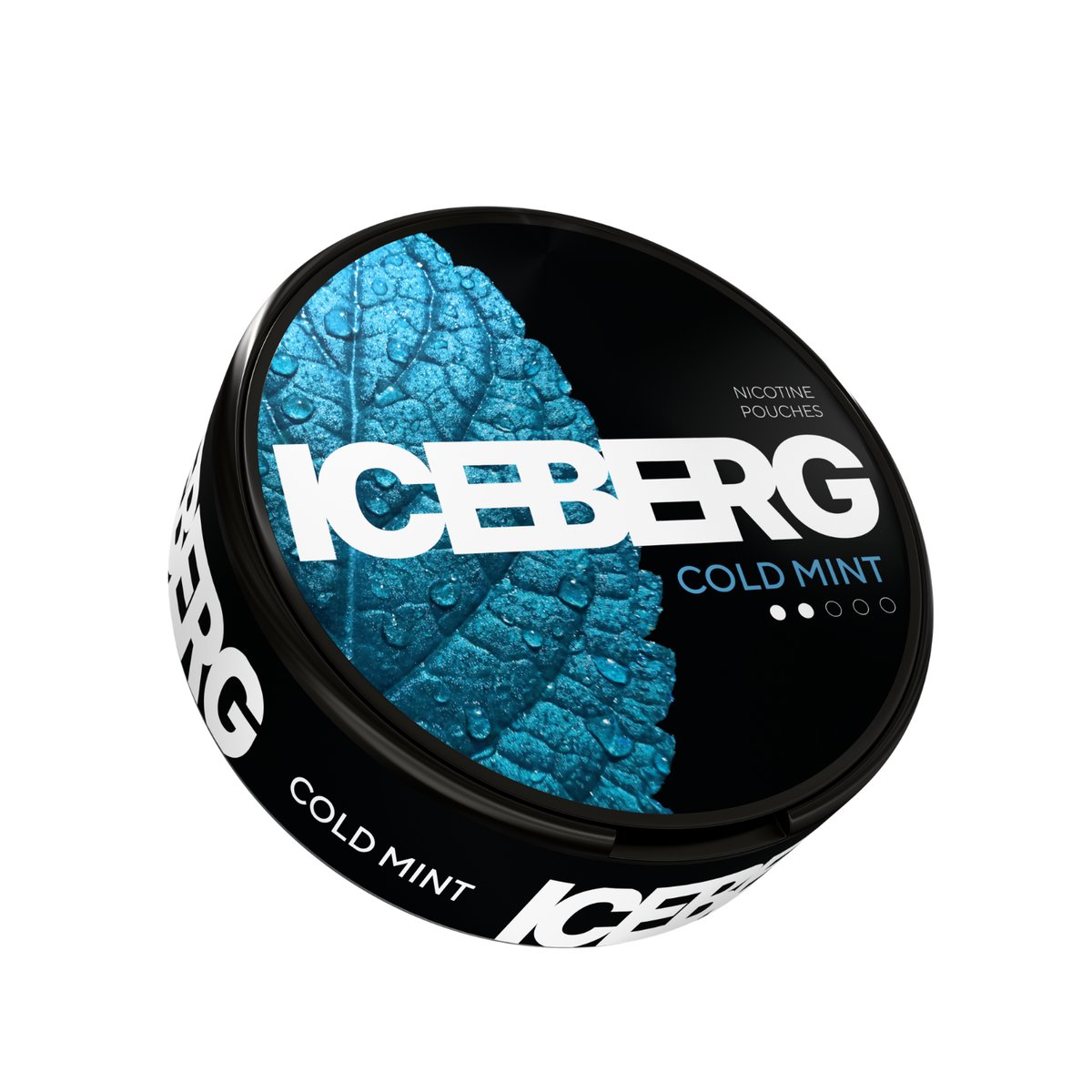
The ICEBERG 12mg range comes in 14g cans of 20 pouches, 0.7g per pouch. The lines labelled 35mg, 50mg, 100mg, 120mg and 160mg come in 16g cans of 20 pouches, 0.8g per pouch. If these large figures are read as mg/g, then in theory 35mg/g is about 28mg per pouch, 50mg/g about 40mg, 100mg/g about 80mg and 120mg/g about 96mg. These are conversions from the label figures published by the manufacturer. Just looking at them makes it clear why these lines are only for people who have used strong nicotine pouches for a long time.
PABLO and CUBA Black
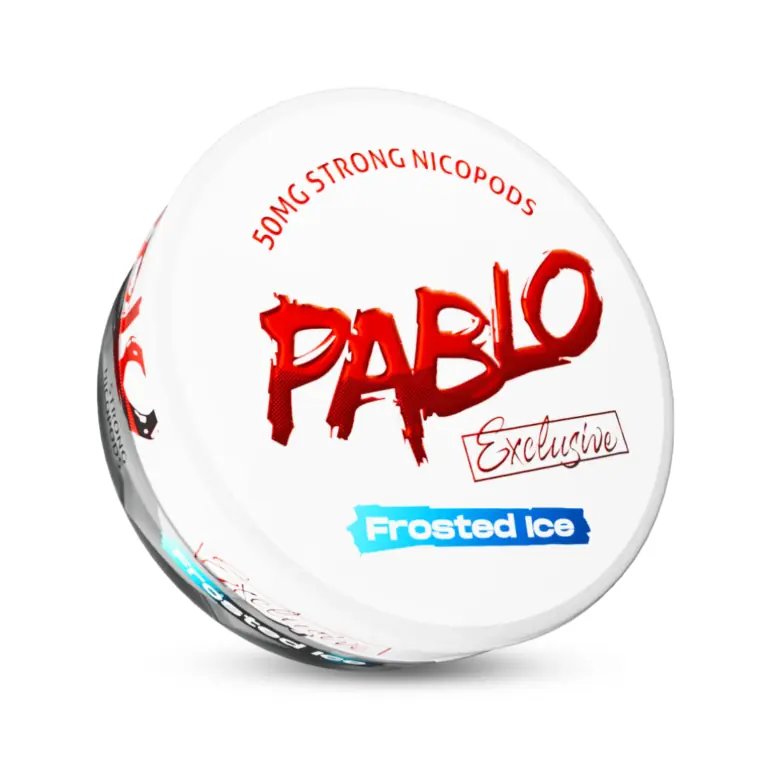
PABLO Exclusive is labelled 30, in a 12g can of 20 pouches, about 0.6g per pouch. Read as mg/g, each pouch is about 18mg. CUBA Black is labelled 43, in a 13g can of 20 pouches, about 0.65g per pouch, equivalent to about 28mg per pouch. Both belong to the very strong group.
Conversion table: mg/g to mg per pouch
The table below is for quick reference. Columns are the weight of one pouch, rows are the mg/g concentration. Values are rounded.
| mg/g \ grams per pouch | 0.45g | 0.6g | 0.65g | 0.7g | 0.8g |
|---|---|---|---|---|---|
| 10 mg/g | 4.5 | 6 | 6.5 | 7 | 8 |
| 15 mg/g | 6.8 | 9 | 9.8 | 10.5 | 12 |
| 20 mg/g | 9 | 12 | 13 | 14 | 16 |
| 30 mg/g | 13.5 | 18 | 19.5 | 21 | 24 |
| 50 mg/g | 22.5 | 30 | 32.5 | 35 | 40 |
| 100 mg/g | 45 | 60 | 65 | 70 | 80 |
| 120 mg/g | 54 | 72 | 78 | 84 | 96 |
How to use it: find the pouch weight closest to your can, then read the value in the matching mg/g row. If the weight falls between two columns, take a value in between.
Strength groups by mg per pouch
There is no official standard shared by all brands, but to make it easier to picture, strengths can be grouped as follows once converted to mg per pouch.
| Group | mg per pouch (approx.) | Suitable for | Examples in the shop |
|---|---|---|---|
| Light | under 5mg | Beginners, light users | HELWIT 3.5 – 4.5mg, ZYN mini 3mg, VELO Japan Label 4mg |
| Medium | 5 – 9mg | People used to nicotine pouches | VELO Japan Label 6mg and 9mg, ZYN Apple Mint 9mg |
| Fairly strong | 9 – 13mg | Regular users | LOOP Strong 9.4mg, international VELO 10 – 10.9mg, CUBA White 10.4mg, ICEBERG 12mg, LOOP Extra Strong, KILLA |
| Strong | 13 – 20mg | Long-time users | VELO Tropical Mango 14mg, LOOP Hyper Strong 15.6mg, CUBA Ninja 15.6mg |
| Very strong | over 20mg (converted) | Only heavy users with years of experience | PABLO, CUBA Black, ICEBERG 35mg and above, Baron |
Why does the same mg feel different?
Two pouches with the same nicotine content on the label can still feel very different. There are four main factors.
1. pH
Nicotine is absorbed through the lining of the mouth more readily in an alkaline environment. Manufacturers use pH regulators to control how fast it is released. At the same 10mg, a pouch with a higher pH may feel quicker and more noticeable.
2. Moisture
Moist pouches usually release nicotine and flavour faster than dry ones. This is one reason high-moisture lines feel strong from the first minutes, while dry pouches are “slow and steady”.
3. Pouch size and format
A long slim pouch touches a wide area of the gum. A small mini pouch has a narrower contact area. With the same amount of nicotine, a small, concentrated pouch can feel more focused.
4. Flavouring
Strong mint and cooling agents can mask some of the initial sting, so nicotine feels “smoother”. Spicy flavours such as chilli or ginger, on the other hand, can make the sensation more intense. Flavour does not change the amount of nicotine, but it changes how you perceive it.
On top of that, people's familiarity with nicotine varies a lot. A 12mg pouch can be “normal” for one person and far too strong for another.
Common misconceptions about strength
“A 50mg can is five times stronger than a 10mg can”
Only true if both use the same unit. If one can says 50mg/g and the other 10mg per pouch, you have to convert first. With a pouch of about 0.8g, 50mg/g is about 40mg per pouch, roughly four times 10mg per pouch, not five.
“Strong at one brand equals Strong at another”
Each brand names its own levels. LOOP Strong is 9.4mg per pouch, while ICEBERG's Strong line is labelled 50mg. The word “Strong” only means something within a single brand.
“More pouches in the can means each pouch is lighter”
Not necessarily. CUBA Ninja has 25 pouches per can but is still in the strong group. The pouch count only tells you the weight of each pouch; you need the concentration as well to know the strength.
“The colder the pouch, the stronger it is”
Coldness comes from flavourings and cooling agents and has nothing to do with nicotine. A very cold pouch can be at a light level.
Choosing the right level: a cautious path
If you already use nicotine in another form and are just switching to nicotine pouches, start in the light group, under 5mg per pouch, for at least one to two weeks. Once you are used to it, you can move up to the medium group. Only go up one step at a time, and only when the current level is truly comfortable.
Signs that a pouch is too strong for you: dizziness, nausea, sweating, a racing heart, or an intense burning that does not ease after a few minutes. If you notice these, take the pouch out immediately and go back to a lower level. There is no “reward” for putting up with a pouch that is too strong.
For very strong lines such as ICEBERG 100mg and above, Hardcore or similar, beginners should not start there. These products are for people who have used strong nicotine pouches for a long time and understand how their body reacts.
Why don't brands all label the same way?
The natural next question is: why is there no common standard? The reasons lie in history and markets. Traditional Swedish snus has long labelled nicotine in mg/g, because loose snus has no “pouch” to count. When nicotine pouches appeared and spread to other markets, many brands switched to mg per pouch because it is easier for users to understand. Some brands kept mg/g, especially for very strong lines, where a big number also becomes part of the product's image.
Labelling rules also differ from country to country. Some require mg/g, some require mg per pouch, some accept both. A brand sold in many markets sometimes prints both figures on the same can. The result is that buyers have to convert for themselves, which is exactly why this article exists.
Three quick exercises
The best way to remember the formula is to work it out a few times. Here are three situations that come up often in the shop.
Exercise 1: You use VELO 10mg and want to try LOOP
You use international VELO at 10mg per pouch and find it comfortable. You want to try LOOP. LOOP Strong is 9.4mg per pouch, Extra Strong 12.5mg, Hyper Strong 15.6mg. Both brands label in mg per pouch, so you can compare directly: LOOP Strong is close to what you use now, Extra Strong is about a quarter stronger, Hyper Strong about half as strong again. The safe choice is LOOP Strong, for example LOOP Ice Cool Mint Strong.
Exercise 2: You use ICEBERG 12mg and are curious about ICEBERG 35mg
ICEBERG 12mg has 20 pouches in a 14g can, about 0.7g per pouch. ICEBERG 35mg has 20 pouches in a 16g can, about 0.8g per pouch. If 35 is mg/g, each pouch is about 28mg. Compared with 12mg per pouch, that is more than double. This is not a “one step up” move but a big leap. If you want something a little stronger than 12mg, options such as LOOP Extra Strong 12.5mg or VELO Tropical Mango 14mg are a more sensible step.
Exercise 3: Comparing CUBA White and CUBA Ninja
CUBA White is labelled 10.4mg with 20 pouches; CUBA Ninja is labelled 15.6mg with 25 pouches; both come in cans of about 12 to 13g. If both figures are mg per pouch, Ninja is about half as strong again as White, and its pouches are smaller. Someone used to CUBA White can consider Ninja as the next step, but should not jump straight from White to CUBA Black labelled 43, which is a different group altogether.
When buying for someone else
Quite a few orders in the shop are for friends or family. In that case, do not guess. Ask the person for the exact name of the product they use, or a photo of the can. With the product name and the figure on the can, staff can find the right product or suggest an equivalent in strength. Buying a can that is too strong for someone else not only wastes money but can also give them an unpleasant experience.
Tips for reading product pages on snussaigon.com
Every product page includes some useful information for working out strength. Look for:
Product name: usually includes the mg figure and level words such as Strong, Extra Strong or Hyper Strong.
Pouches per can: usually 20, but some lines have 15 (VELO Japan Label), 25 (CUBA Ninja) or 55 strips (ICEBERG Strip).
Net weight: used to calculate the weight of each pouch.
Format: slim, mini, regular or strips.
With the last three, you can apply the formula above yourself. If you are still unsure, message the shop and staff will help you compare two specific products.
Price per pouch: another number worth calculating
Once you understand strength, it is also worth calculating price per pouch rather than per can. A VELO Japan Label can at 180,000 VND for 15 pouches is 12,000 VND per pouch. A CUBA Ninja can at 220,000 VND for 25 pouches is 8,800 VND per pouch. A LOOP can at 250,000 VND for 20 pouches is 12,500 VND per pouch. Combining price per pouch with strength per pouch gives you a fuller picture of the value of each can. Our article on nicotine pouch prices has a more detailed price list.
Frequently asked questions
What if the can doesn't show a unit?
Use the rule of thumb: figures above about 25 are usually mg/g. Then double-check with the weight and pouch count, or ask the shop.
Is mg/g a “misleading” way to label?
Not really. It is a valid method used in many markets. The problem only arises when buyers compare it with mg per pouch without converting.
Should I cut a strong pouch in half to make it lighter?
No. Pouches are designed to be used whole; cutting one open lets the material spill into your mouth. If a pouch is too strong, choose a lighter product.
Does keeping a pouch in longer increase the nicotine absorbed?
Most of the nicotine is released in the early part of use. Keeping a pouch in too long mainly just makes it lose flavour. Our beginner's guide to using snus explains more.
How many mg should beginners start with?
Around 3 to 6mg per pouch is a sensible starting point, for example HELWIT Mint 3.5mg, ZYN Black Cherry 3mg or VELO Sniffy Spearmint 6mg.
In summary
Nicotine pouch strength is labelled in two ways: mg per pouch and mg per gram. Small figures, roughly under 20, are usually mg per pouch. Large figures such as 35, 50, 100 or 120 are usually mg/g. To compare, convert using mg per pouch = mg/g × weight of one pouch, where the weight of one pouch is the can's weight divided by the number of pouches. Beyond the figure, pH, moisture, pouch format and flavouring all affect how strong it actually feels. Most importantly: choose the level that suits you, step up gradually and never skip levels.
See also our guide on choosing the right nicotine pouch strength, or explore by brand: HELWIT, VELO, LOOP, CUBA and ICEBERG.
This product contains nicotine, which is addictive. For adults aged 18 and over only. Not for use during pregnancy or breastfeeding.